

Finding the best office chair mat means staring down a wall of lookalike products and contradictory advice. You need a mat that stops your rolling chair from trashing a floor you care about, but you also do not want a sheet of ugly plastic that screams “temporary office.” This guide skips the generic roundups. We focus on the real material tradeoffs between clear PVC, tempered glass, and thick carpet mats, with hardwood specific details that most articles leave out.
Key Takeaways
- Clear PVC mats cost under $100 but frequently crack, curl, and yellow within a year under daily use. Tempered glass costs significantly more but carries lifetime warranties and resists denting.
- Hardwood floors need more than just a barrier. Surface finish compatibility, anti static properties, and metal to glass separation matter and are rarely covered in standard guides.
- Measuring your actual rolling range before buying prevents the most common sizing mistake. A mat that looks big enough on a product page often fails to cover your full daily motion.
- Quick summary — what to expect from this guide
- Market context — why there is no clear 2026 market leaderboard
- Chair mat types at a glance — clear PVC, thick carpet mats, and tempered glass
- Tempered glass vs PVC — cost, durability, and real tradeoffs
- Why clear PVC mats crack — common complaints and what to look for
- Hardwood protection — the subtleties most articles omit
- Thickness and construction — how to prevent carpet indentation and protect hardwood
- How to measure for the correct mat size — step by step
- Buying checklist — features that matter for a quick scan
- Alternatives to traditional mats — what to consider in 2026
- Short recommended picks by scenario
- Conclusion
- Frequently asked questions
Quick summary — what to expect from this guide
This is not a numbered list of ten mats with affiliate links and recycled specs. We walk through the three main material categories, explain why some clear mats fail within months, and call out the hardwood protection gaps that even detailed roundups skip. You will get a repeatable measuring method, a buyer checklist you can use on any product page, and short scenario based picks at the end.
The sources we reviewed include product reviews and buying guides but lack quantitative 2026 market statistics, so we set that expectation here. No market share numbers or year specific sales data exist in the public materials we used. Recommendations are based on product performance patterns, documented buyer complaints, and manufacturer claims rather than sales leaderboards.
Market context — why there is no clear 2026 market leaderboard
Public sources used for this piece do not provide 2026 sales or market share data. Some categories have transparent rankings. Chair mats do not. The market is fragmented across big box retailers, Amazon aggregators with rebranded factory stock, and a handful of specialized manufacturers selling direct.
Without clean market share figures, we lean on what is measurable. Complaint frequency in reviews. Warranty length and what the warranty actually covers. Thickness tolerances that affect real world durability. A mat that tops a search result is not necessarily the one that lasts. This matters because the best office chair mat for your floor type and daily load might be a brand you have never seen in a top ten list.
If you are also building out a full workspace on a budget, our home office setup under 1000 guide covers the full desk to chair to lighting picture without overspending.
Chair mat types at a glance — clear PVC, thick carpet mats, and tempered glass
Three materials dominate the category. Each has a distinct visual footprint, durability profile, and floor compatibility range.
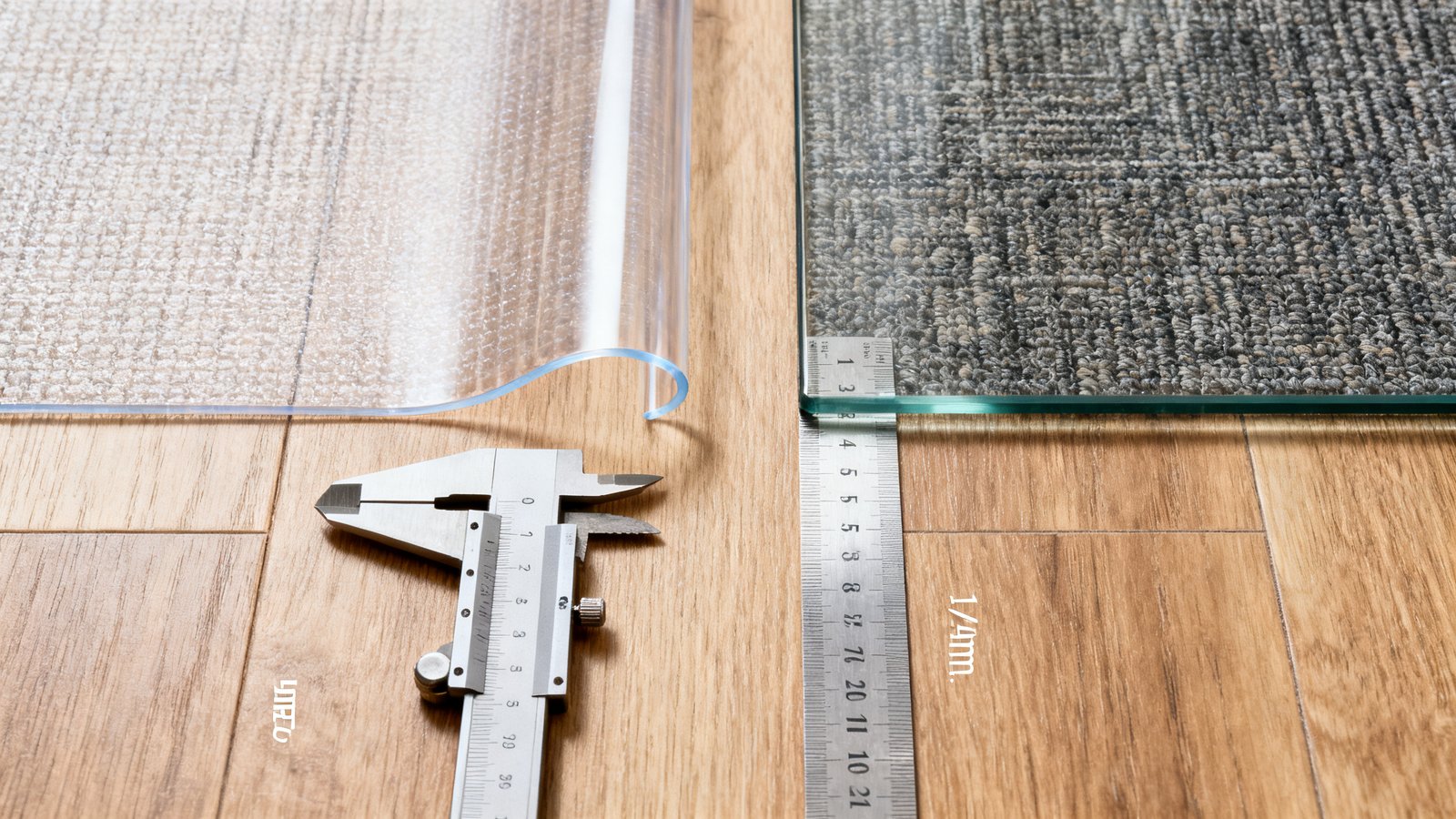
Clear PVC mats are the most common and the most affordable. They range from roughly 2 to 5 millimeters thick, with the better options hitting that 3 to 5 millimeter range for adequate rigidity. They offer a near invisible look that preserves the aesthetic of a hardwood floor or low pile carpet underneath. The tradeoff is longevity. PVC mats scratch, curl at the edges over time, and can crack under concentrated weight if the chair casters dig in repeatedly.
Thick carpet mats sit at the opposite end of the spectrum. These are typically made from dense polycarbonate or composite materials with a textured or studded underside. At around 1 inch thick, they prevent carpet indentation and provide a slight anti fatigue effect underfoot. They are not invisible. Their visual impact is higher, and they work best in dedicated home offices where function overrides the need for a discrete look.
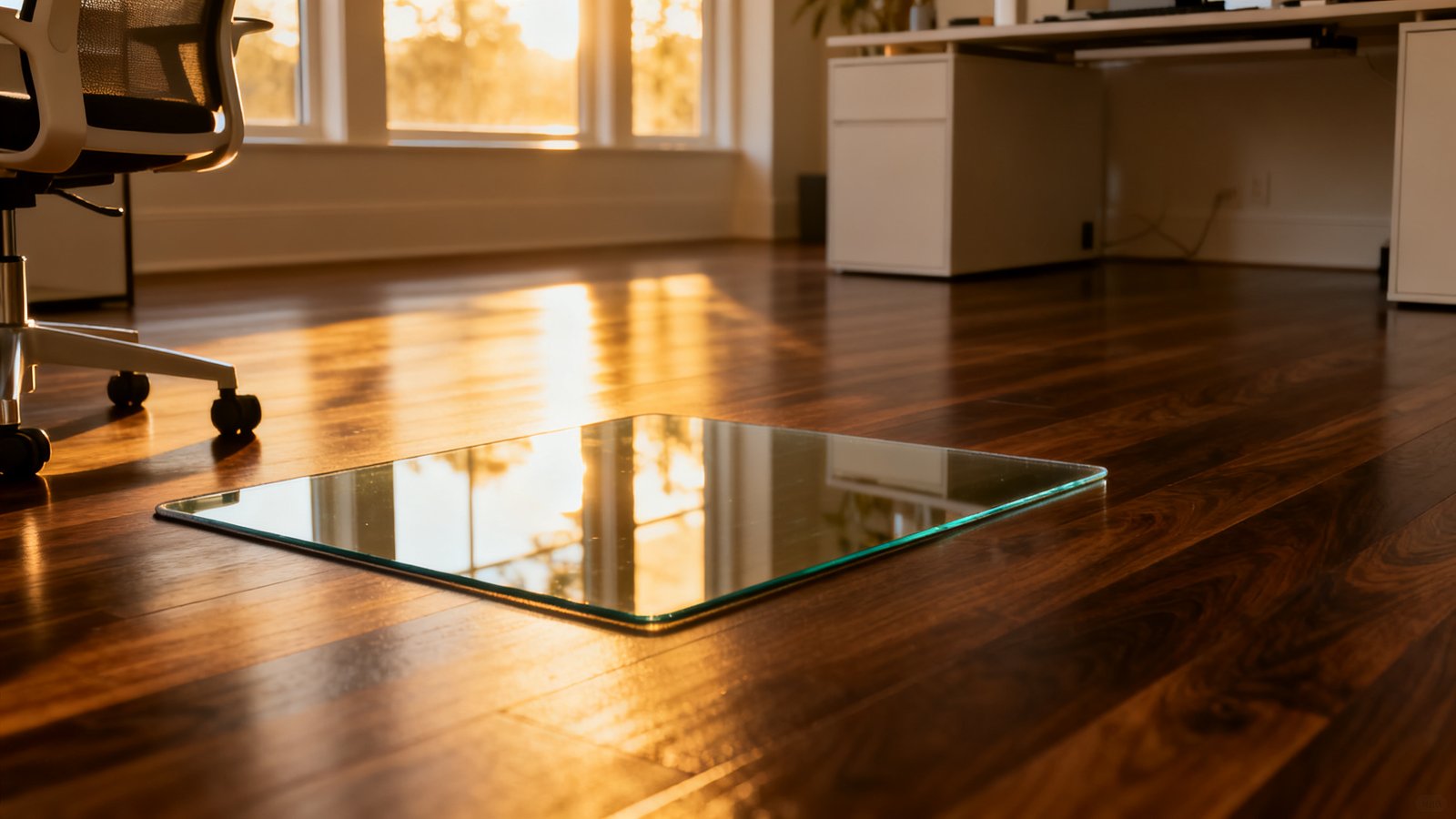
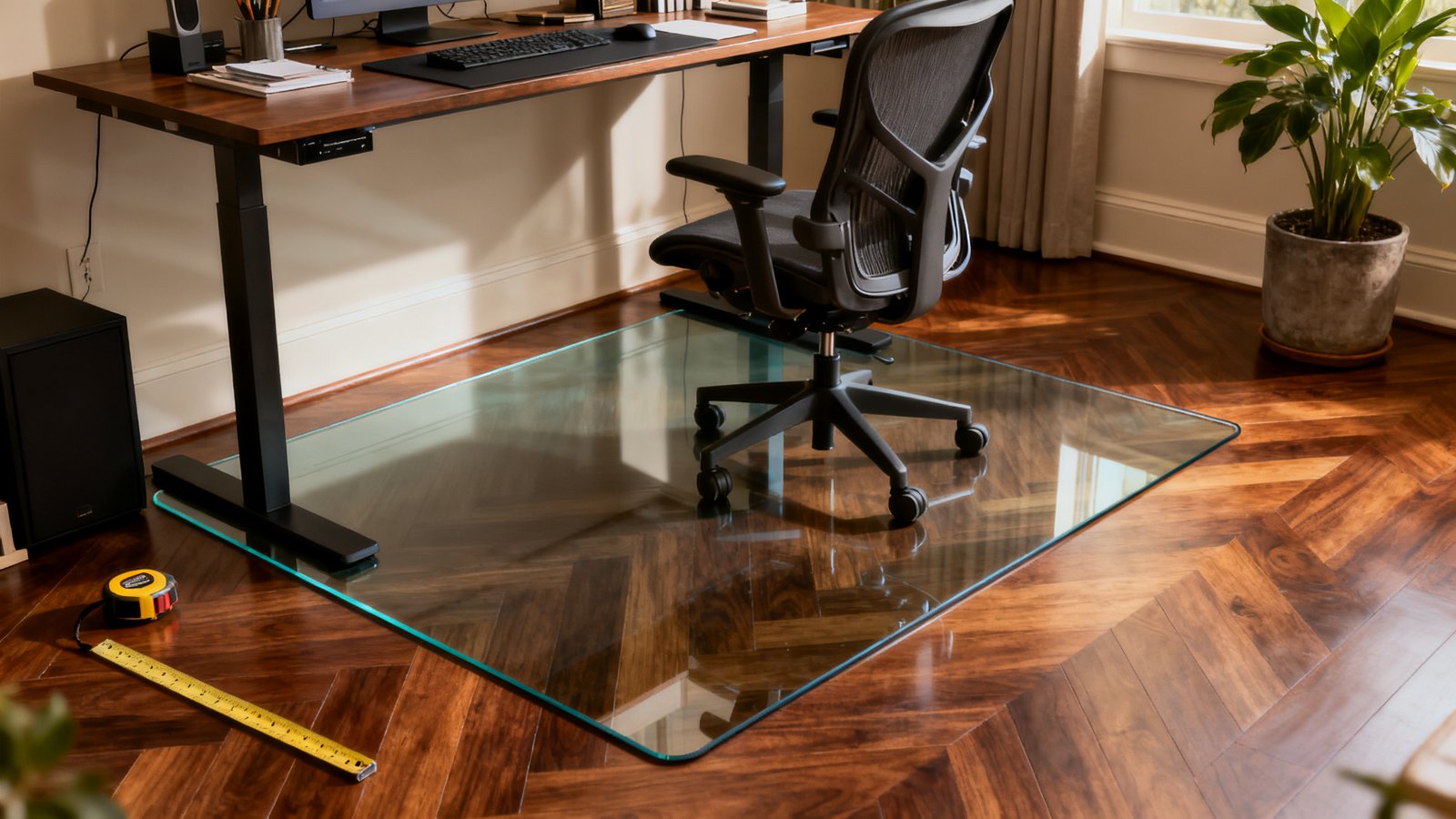
Tempered glass chair mats are the premium option. The glass mats we reviewed are roughly ¼ inch thick and built to withstand heavy weight without denting. They deliver a clean, modern aesthetic that complements hardwood floors and high end office furniture. The weight of a glass mat keeps it planted without adhesive, and the surface resists scratching far better than PVC. The downside is cost and weight during installation.
If you are still choosing the chair that will roll on this mat, our office chair buying guide walks through what to look for before committing to a $400 plus purchase.
Tempered glass vs PVC — cost, durability, and real tradeoffs
The price gap is real. Budget PVC mats are available under $100, while tempered glass is described in our sources as significantly more expensive. An exact dollar for dollar comparison is not provided in the materials we reviewed, but the difference is often several hundred dollars at comparable sizes. The question is whether the premium holds up over time.
PVC mats that cost $60 and crack within 14 months end up costing more than a glass mat that lasts a decade. The math favors glass if you stay in the same space and use the mat daily. The math favors PVC if you are in a temporary rental, furnishing a secondary workspace, or need a mat immediately and cannot stretch the budget.
Weight is the other practical divider. A tempered glass mat can weigh 30 to 50 pounds. You are not sliding it under a bookshelf when guests arrive. PVC mats weigh a few pounds and can be rolled or moved without help. If your home office doubles as a guest room or living space, the permanence of glass becomes a design decision, not just a durability one.
Warranty terms differ sharply. Lifetime warranties on glass mats are a selling point that PVC manufacturers rarely match. When a PVC mat cracks, the standard remedy is replacement at a prorated cost or a limited window for claims.
For those comparing premium ergonomic investments, our Herman Miller Aeron vs Steelcase Leap comparison applies a similar cost per year logic to chairs.
Why clear PVC mats crack — common complaints and what to look for
The most common complaints about clear PVC mats follow a predictable pattern. Mats do not stay in place. They slide on hard surfaces and bunch up on carpet. Over time, edges curl upward, creating a tripping hazard and a spot where cracks start. Cracking and denting accelerate when the mat is too thin or when metal casters concentrate force on a small point. Yellowing happens as the material ages and reacts to UV exposure. The end result is frequent replacement. A product that should last years becomes an annual expense.
Prevention starts with thickness. Mats under 3 millimeters are asking for trouble under daily use. An anti slip backing or a separate non slip underlay keeps the mat from shifting, which reduces edge stress. Avoid direct metal caster contact when possible. Some users switch to rollerblade style casters with polyurethane wheels that distribute weight more evenly. Room temperature also matters. PVC becomes more brittle in cold spaces, so an unheated basement office or a room with wide temperature swings accelerates cracking.
Hardwood protection — the subtleties most articles omit
Most guides treat hardwood as just another hard surface. It is not. The finish on a hardwood floor interacts with mat materials in ways that carpet does not. Polyurethane finished floors can react with certain plasticizers in PVC, causing discoloration or a hazy transfer mark over time. Oil finished floors are even more sensitive to trapped moisture and chemical contact. A mat that advertises itself as safe for hardwood should explicitly state compatibility with your finish type, and very few do.
Static electricity is rarely mentioned in hardwood sections of buying guides, but it matters. A PVC mat on a hardwood floor can generate static discharge that is annoying to the user and potentially damaging to sensitive electronics. Anti static properties are typically discussed only for carpet setups, leaving hardwood users uninformed. Glass mats with natural silica composition largely avoid this issue.
Separation of metal from glass is another detail buried in niche reviews. Some glass mat manufacturers note that metal objects including chair bases with exposed metal must not make direct contact with the glass surface. A thin protective layer or pad is required. Without it, metal on glass contact can scratch or, in rare cases, compromise the tempered surface.
Eco friendly certifications are a quiet differentiator. BPA free and phthalate free claims appear on higher end glass mats but are almost never addressed in general hardwood protection guides. If you chose hardwood flooring partly for indoor air quality and low toxicity, a mat that off gasses undermines that choice. Natural silica sand composition in glass mats is a relevant detail for buyers who prioritize material transparency.
Warranty considerations shift when hardwood is involved. A mat that fails on carpet leaves dents in the carpet. A mat that fails on hardwood can leave scratches, finish damage, or discoloration that costs far more to repair. Lifetime warranties on glass mats become more compelling in this context. Our ergonomic workstation setup guide addresses how floor protection fits into a broader healthy workspace.
Thickness and construction — how to prevent carpet indentation and protect hardwood
Thickness requirements diverge sharply by floor type. For carpeted areas, particularly medium to high pile carpet, a thickness of 1 inch is normally sufficient to provide floor protection and prevent indentation. This thickness also adds a slight anti fatigue effect that thinner mats cannot match. General purpose chair mats at 3 to 5 millimeters are specced for rigidity on hard surfaces and low pile commercial carpet, not for plush residential carpet. Using a 3 millimeter mat on thick carpet guarantees indentations within weeks.
Glass mats at ¼ inch thick sit in a middle ground. They are rigid enough to handle carpet with a lower pile height, but they do not provide the same anti indentation performance as a dedicated 1 inch thick carpet mat. On hardwood, that ¼ inch glass surface is more than adequate, and the weight of the glass does the work of keeping the mat flat.
Material stiffness matters separately from thickness. A 5 millimeter PVC mat with high recycled content can perform worse than a 3 millimeter mat made from virgin polycarbonate. Spec sheets rarely tell the full story. User reviews that mention edge curling and denting patterns are a better proxy for real world rigidity.
For hardwood specifically, err toward thickness and weight. A lighter mat that slides around will abrade the finish over time, even if the material itself is not scratching the floor. The tiny grit particles that get trapped under a shifting mat act like sandpaper. A heavy glass mat or a PVC mat with a reliable non slip backing minimizes this micro abrasion risk.
How to measure for the correct mat size — step by step
The most common sizing mistake is trusting a product photo or guessing based on desk width. Mats look larger in isolation than they actually are under a chair. A 36 by 48 inch mat sounds generous until you roll backward to reach a filing cabinet and your casters drop off the edge.
Start by sitting in your chair at your normal working position. Move through your full range of motion. Roll forward to reach items on the desk, backward to stand up, sideways toward any drawers or shelves. Mark the outer boundaries using masking tape or place books at the farthest points you reach. Do this for a full workday if possible. Your natural rolling pattern is often wider than you think.
Measure the marked area from edge to edge. The resulting rectangle is your minimum mat size. Add 4 to 6 inches in each direction for a safety margin. Catching the edge of a mat repeatedly with a caster is what starts the cracking cycle.
Decide on orientation. A vertical orientation works for narrow spaces where the desk is against a wall. A horizontal orientation covers more side to side motion and suits wider workstations. Ensure the mat does not protrude into door swing paths or major walkways. A mat that blocks a door is a daily annoyance that will have you searching for clutter free desk setup solutions just to reclaim the space.
Buying checklist — features that matter for a quick scan
Use this checklist when comparing product pages. Most listings bury crucial details in the description or omit them entirely.
- Material: Clear PVC, polycarbonate, composite, or tempered glass. Match to your durability expectations and floor type.
- Thickness: 3 to 5 mm for hard surfaces and low pile carpet. 1 inch for medium to high pile carpet. ¼ inch for glass mats.
- Anti slip backing: Non negotiable for hardwood. Studded undersides are for carpet only and will damage wood.
- Warranty: Lifetime warranties on glass mats are a strong signal. PVC warranties often cap at 1 to 3 years.
- Edge design: Beveled or ramped edges reduce tripping and make rolling on and off the mat smoother.
- Eco certifications: Look for BPA free, phthalate free, and GREENGUARD certifications if indoor air quality matters to you.
- Price range: Budget PVC can be found under $100. Glass mats cost several times that. Set expectations accordingly.
- Return policy: A mat that curls or cracks in the first 60 days should be returnable. Check the window before buying.
Quick scenario guidance. For hardwood plus aesthetic, start your search with tempered glass. For carpet plus anti indentation, look at 1 inch thick composite mats with a textured underside. For heavy users over 250 pounds, glass or thick polycarbonate outperforms standard PVC regardless of floor type.
| Feature | Clear PVC | Thick Carpet Mat | Tempered Glass |
|---|---|---|---|
| Typical price | Under $100 | $50 to $150 | $200 to $500+ |
| Thickness | 3 to 5 mm | ~1 inch | ¼ inch |
| Visual impact | Low, near invisible | High, visible texture | Low, clean modern look |
| Crack resistance | Low, common failure point | Moderate | High, resists denting |
| Warranty | 1 to 3 years typical | Varies | Often lifetime |
| Best for | Hard surfaces, light use, budget | Carpet, anti fatigue, heavy use | Hardwood, aesthetics, longevity |
Alternatives to traditional mats — what to consider in 2026
No 2026 market statistics were provided in our sources for alternatives, so these recommendations are based on functional fit rather than market trends.
Area rugs with protective underlays can replace a dedicated mat in a living room office setup. A low pile natural fiber rug over a thick felt rug pad protects hardwood from caster wear while integrating into room decor. The rug will need periodic cleaning and eventual replacement, but the aesthetic tradeoff is often worthwhile for design conscious buyers.
Specialized casters for hardwood are a mat free alternative that is gaining traction. Rollerblade style wheels made from soft polyurethane roll smoothly on hardwood without scratching, provided the floor is kept clean. Grit and debris on the floor will still cause damage over time, so this option requires consistent cleaning discipline. Our how to adjust ergonomic chair guide covers caster swaps as part of a broader chair setup process.
Platform boards, essentially a rigid panel that sits under the chair, work well on deep pile carpet where even thick mats struggle. They are less attractive than glass mats and have a higher visual footprint, but they solve indentation issues completely.
Anti fatigue rugs combine standing desk comfort with floor protection. If you use a standing desk for part of the day, a single anti fatigue mat that extends under the chair area can serve both purposes. This is a niche solution that works best in dedicated office rooms where the mat does not need to disappear.
For those dealing with back pain while working, our best office chair back pain guide addresses seating choices that work alongside whatever floor protection you choose.
Short recommended picks by scenario
Best clear option for aesthetic plus light use: A virgin polycarbonate mat at 4 to 5 millimeters with a smooth, non studded backing. Look for a beveled edge and an explicit anti yellowing claim in the product description. Expect to pay $60 to $90.
Best for hardwood and longevity: A tempered glass mat at ¼ inch thick with a lifetime warranty and certifications for BPA free and phthalate free materials. Confirm that the manufacturer recommends or includes a separation layer for metal chair bases. This is the pick that aligns with a design conscious, buy it once mindset.
Best thick carpet mat for anti indentation: A 1 inch thick composite mat with a studded underside rated for medium to high pile carpet. Prioritize weight and rigidity over brand recognition. Heavier mats perform better on plush carpet.
Budget clear PVC under $100: Accept that replacement will likely be needed within 12 to 24 months. Buy the thickest option your budget allows, add a separate non slip underlay, and pair with soft casters to extend usable life.
Before buying any of these, measure your space using the steps above. A correctly sized budget mat outperforms an undersized premium mat every time.
If you are pairing this with a new chair purchase and working with a tighter budget, our best ergonomic chair under 300 guide covers affordable seating that does not sacrifice support.
Conclusion
The chair mat market is full of near identical products with wildly different lifespans. Clear PVC works for light use and tight budgets but expects replacement within a year or two if you roll on it eight hours a day. Tempered glass costs more upfront and justifies that cost through durability, a clean look, and warranties that actually mean something. Thick carpet mats solve indentation problems that thin mats cannot touch, especially on plush residential carpet. Hardwood protection demands more than a plastic sheet. Finish compatibility, anti static behavior, and edge design matter in ways that most roundups skip.
Take ten minutes to measure your actual rolling range. Look at the warranty terms before the price tag. And if your floor is a long term investment, choose a mat that treats it like one. The best office chair mat is the one that matches your floor, your daily load, and your tolerance for replacing things that should not break.
Ready to protect your floor and keep your workspace looking clean? Start by measuring your rolling area with masking tape tonight, then check the buying checklist against any mat you consider. A little prep work eliminates the most common purchase regrets.
Frequently asked questions
What thickness chair mat do I need for hardwood floors?
For hardwood, a mat at least 3 to 5 millimeters thick provides adequate rigidity for standard use. Tempered glass mats at ¼ inch thick are also an excellent choice. The key factor beyond thickness is a non slip backing that prevents the mat from shifting and trapping grit that can abrade the floor finish over time.
Do clear PVC chair mats always crack?
Not always, but cracking is the most common failure mode reported by users. Mats under 3 millimeters thick, mats used with hard nylon casters, and mats in rooms with temperature swings crack faster. Choosing a thicker mat, using a non slip underlay, and swapping to soft polyurethane casters all reduce cracking risk.
Are tempered glass chair mats worth the higher cost?
Tempered glass is described in our sources as significantly more expensive than PVC, with budget PVC available under $100. Glass mats resist denting, scratching, and yellowing, and often carry lifetime warranties. If you plan to stay in the same workspace for three or more years and value a clean aesthetic on hardwood, the cost per year can be lower than replacing PVC mats repeatedly.
Can I use a chair mat on high pile carpet?
Yes, but you need a mat specifically rated for high pile carpet. Standard 3 to 5 millimeter mats will sink and fail. Look for mats around 1 inch thick with a studded underside designed to grip carpet without compressing it fully. A platform board is another alternative for very plush carpet where even thick mats struggle.
How do I stop my chair mat from sliding on hardwood?
Use a mat with a smooth, non studded anti slip backing rated for hard surfaces. Studded backs are for carpet only and will scratch hardwood. If your current mat slides, place a thin rug pad cut to size underneath. The pad adds grip without adhesive and also dampens rolling noise.