

Quick verdict — which situations favor mesh vs fabric
Key Takeaways
- Mesh provides a measurable 2–3°C cooling advantage over fabric during 8-hour sits, making it the stronger default for hot or humid climates.
- Fabric chairs typically last 7 to 10 years versus 5 to 8 years for mesh, but both ranges depend heavily on the quality of the underlying frame and foam.
- Most published sources lack hard numbers on 2-hour temperature shifts, static friction in humidity, cleaning costs, and sagging frequency — meaning your final choice should hinge on the warranty and the questions you ask before purchasing.
Table of Contents
- Quick verdict — which situations favor mesh vs fabric
- Breathability & thermal comfort (hot vs cold climates)
- Durability & expected lifespan (what lasts longest)
- Common failure modes — sagging, pilling, and what reviews actually say
- Maintenance, cleaning frequency and real-world costs
- Pets, dust and hair — what materials trap or shed debris
- Humidity, stickiness and static — comfort in humid climates
- Warranty & manufacturer support — what to look for
- Aesthetics, upholstery types and fabric options explained
- Decision matrix — choose by climate, daily hours, pets, and maintenance tolerance
- What reviewers and manufacturers often don’t disclose — tests and questions to demand
- Quick buyer checklist & final recommendation
Breathability & thermal comfort (hot vs cold climates)
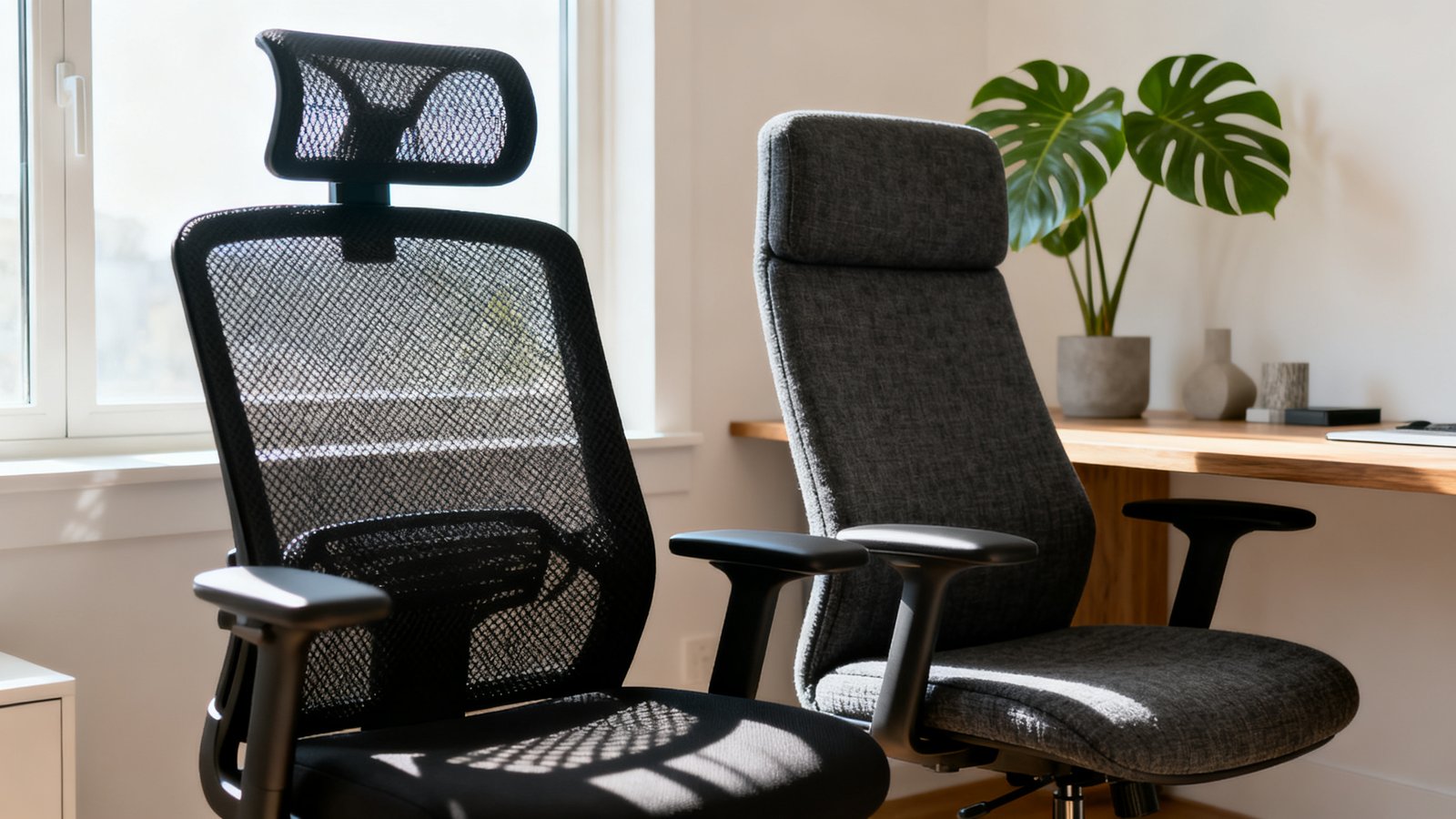
Mesh breathes because it is, quite literally, full of holes. Air circulates through the backrest and seat pan, pulling heat away from your body. The best evidence we have points to a 2–3°C (approximately 3.6–5.4°F) lower contact temperature for mesh compared to fabric during a full 8-hour workday, as cited by Eureka Ergonomic. That figure is small on paper but significant when you’re in the middle of a long video call and your lower back starts to sweat.
Fabric works differently. It insulates. Woven polyester or knit upholstery traps a thin layer of air that warms up with your body heat. In a cool basement office or a drafty converted attic, that insulation becomes a genuine comfort feature. You won’t feel that initial cold shock when you sit down, and your muscles may stay more relaxed over a long session. However, if your workspace hits 78°F or above regularly, that same insulation turns into a heat trap. There is an important gap in the published research: no source we reviewed provides a 2-hour temperature differential. The 8-hour number is useful, but a shorter interval would tell us how quickly the materials diverge in comfort, which matters for people who alternate between standing and sitting throughout the day.
Durability & expected lifespan (what lasts longest)
Reported typical lifespans place fabric chairs in the 7 to 10 year range, while mesh chairs often land between 5 and 8 years, according to Eureka Ergonomic. These numbers are averages, not guarantees. A cheap mesh chair built on a flimsy plastic frame may sag within 18 months. A premium upholstered chair with high-density foam and commercial-grade fabric can easily exceed a decade of daily use. The frame, the foam density, and the stitching quality matter just as much as the surface material.
If you sit 4 to 9 hours a day and weigh above 200 pounds, the lifespan estimates skew downward for both materials. Mesh tension can fade faster under heavier loads, while fabric cushions can compress and lose their shape. When you’re comparing models, look for chairs that explicitly state their weight capacity and foam density. If a manufacturer won’t share those specs, treat the lifespan claim as marketing fluff. This is also where an office chair buying guide becomes indispensable, as it helps you weigh frame construction and adjustment mechanisms alongside material choice.
Common failure modes — sagging, pilling, and what reviews actually say
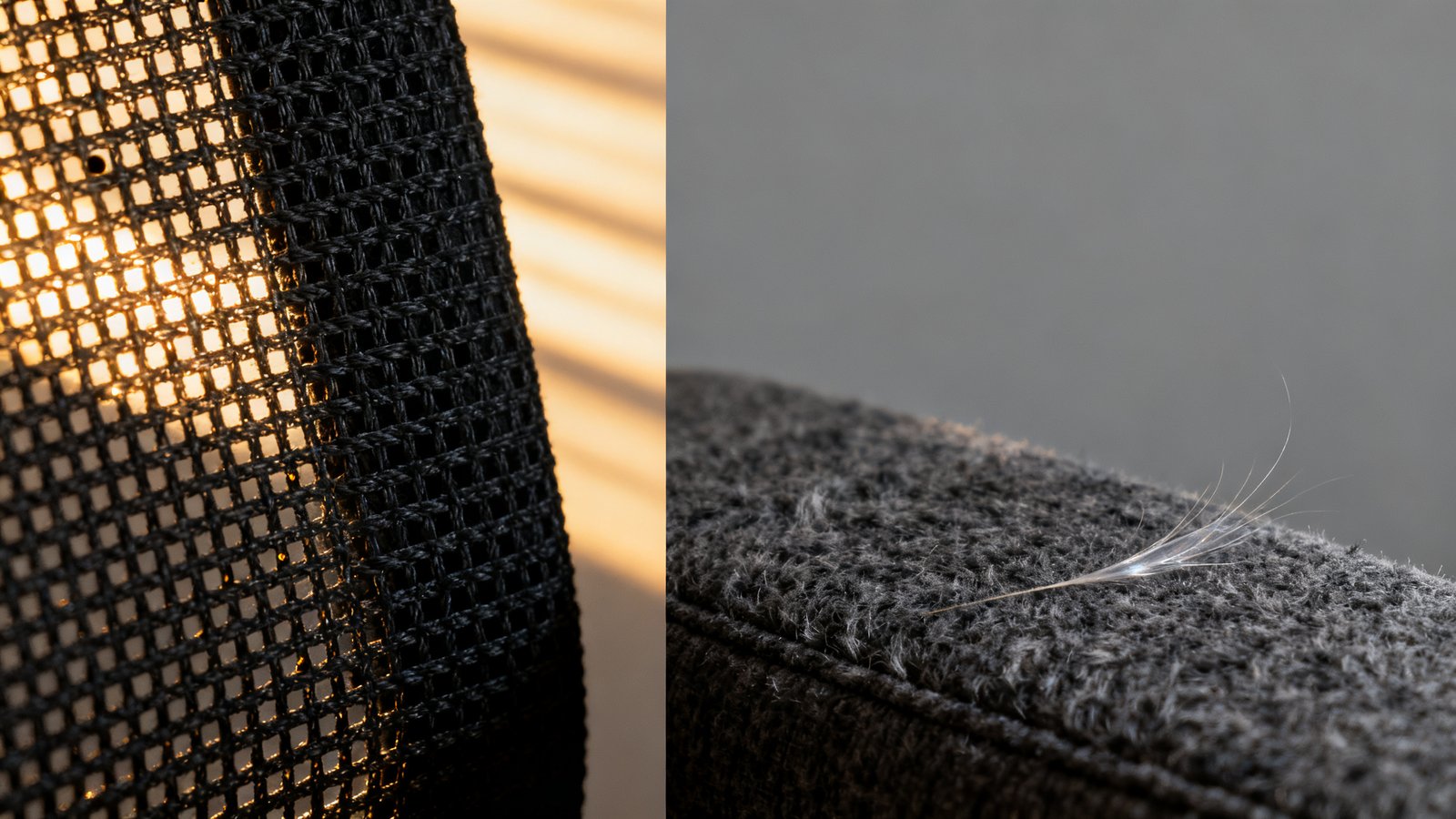
Sagging is the primary failure mode cited for mesh chairs, though the evidence remains frustratingly qualitative. Multiple sources mention that low-quality mesh can lose tension over time, but none provide a percentage of reviews that mention sagging versus pilling. Aosom and 4myoffice both describe sagging as a risk associated with budget mesh, while fabric chairs are more often criticized for pilling, staining, and odor absorption. The absence of hard review statistics means you’re forced to rely on your own inspection.
Fabric pilling happens when short fibers break and form tiny balls on the surface. It’s unsightly but rarely structural. Sagging mesh, on the other hand, directly reduces lumbar support and can make a chair unusable for long sits. If you buy a mesh chair and notice the weave starting to loosen after 18 months, that’s a sign the polymer filaments are fatiguing. At that point, no amount of cleaning or adjustment will restore the original support. When you’re evaluating a budget pick, like those found in a roundup of the best office chair under 150, you should expect a shorter lifespan and prioritize return policies.
Maintenance, cleaning frequency and real-world costs
Mesh chairs are inherently easier to wipe down. A damp microfiber cloth and a mild all-purpose cleaner can remove dust, skin oils, and the occasional coffee splash in under two minutes. The open structure means spills often pass straight through rather than pooling on the surface. Fabric chairs, especially lighter colors, show stains more readily and typically need a dedicated upholstery cleaner or a steam cleaning session every few months to stay fresh. Aosom describes mesh as low-maintenance, while 4myoffice notes that fabric is more susceptible to staining.
What’s missing from every source we examined is a dollar figure. No one publishes a 3-year cleaning cost comparison between the two materials. If you clean fabric yourself with a $15 bottle of upholstery spray every quarter, the cost difference is negligible. If you hire a professional steam cleaning service once a year, you might spend $60 to $100 annually on upkeep. The real cost is time. Mesh saves you cleaning minutes, and for anyone who values a clutter free desk setup that extends to easy chair maintenance, that simplicity matters.
Pets, dust and hair — what materials trap or shed debris
Pet owners face a daily battle against hair and dander. Mesh generally wins this fight because fur and dust don’t embed themselves into a weave. You can often vacuum a mesh backrest with a brush attachment or simply wipe it down. One source, Bonseat, suggests mesh is resistant to dust accumulation, while Eureka Ergonomic describes mesh as acting like a grater for dead skin cells. Fabric, particularly textured weaves, grabs pet hair and holds onto it. A lint roller becomes a permanent desk accessory.
Here again, hard metrics are absent. No manufacturer publishes fiber density values or a standardized pet-hair resistance score. If you have a long-haired dog or cat, you’re better off choosing a mesh chair with a smooth, tight-knit surface rather than an open, net-like weave that can snag claws. If you prefer fabric, ask about stain-resistant treatments like Crypton or a similar moisture barrier. An ergonomic workstation setup that includes a washable seat cover can also extend the life of a fabric chair in a pet-friendly home.
Humidity, stickiness and static — comfort in humid climates
Living in a humid climate changes how materials feel against your skin. Mesh allows moisture vapor to escape, which reduces that clammy, stuck-to-the-chair sensation after long sits. One source references a qualitative 40–50% improvement in moisture management for mesh over standard fabric, though no static friction coefficients are provided to back that claim scientifically. Fabric, particularly synthetic blends, can feel sticky when humidity rises above 70% and may generate static in very dry conditions.
The practical implication is straightforward: if you live in Florida, Singapore, or anywhere with persistent humidity, mesh will feel noticeably cooler and less sticky. If you live in a dry, cold climate where static shocks are a daily annoyance, a fabric chair with a tighter weave may actually feel more comfortable. The absence of published friction coefficient data means you’ll have to rely on this qualitative guidance until manufacturers start releasing more rigorous test results. The same principle applies when you’re shopping for accessories like the best office chair mat, where material choice affects how your chair moves and feels on the floor.
Warranty & manufacturer support — what to look for
Warranty terms can reveal how much confidence a manufacturer has in its materials. Comfort Seating explicitly lists a 10-year warranty on its mesh chairs, but that’s one data point, not an industry standard. The broader research shows no systematic comparison of mesh versus fabric warranty lengths. Some brands cover the frame for 10 years but exclude the mesh or fabric after just 2 years. Others prorate the coverage, meaning you’ll pay a percentage of the replacement cost as the chair ages.
When you’re evaluating a chair, ask these specific questions: Does the warranty cover mesh tension loss or fabric pilling, or only structural frame defects? Is there a separate coverage period for the upholstery material? Are shipping costs for replacement parts included? If the seller can’t or won’t answer, assume the warranty is designed to protect the manufacturer, not you. This is especially important for anyone who has already invested in a complete home office setup under 1000 and can’t afford to replace a chair every three years.
Aesthetics, upholstery types and fabric options explained
Fabric chairs offer far more variety in color, texture, and pattern. Woven polyester remains the most common option because it’s affordable and moderately durable. Knit fabrics feel softer and look more residential, while faux leather or bonded leather delivers a sleek, wipe-clean finish that appeals to a modern, minimalist taste. Mesh chairs, by contrast, tend toward a more utilitarian, tech-forward look. Open mesh patterns reveal the chair’s internal frame, which can feel industrial, while tighter knits soften the appearance and blend better into a living room that doubles as an office.
The aesthetic decision often comes down to how your chair interacts with the rest of your workspace. If you’ve built a warm, wood-accented room, a textured fabric in a neutral tone will likely integrate more naturally. If your setup leans toward a crisp, monochromatic minimal desk setup 2026 with metal and glass, a black or grey mesh chair reinforces that look. Just know that neither option is inherently more professional. The chair’s silhouette and how well you maintain it will matter far more than whether the surface is mesh or fabric.
Decision matrix — choose by climate, daily hours, pets, and maintenance tolerance
This matrix translates the evidence we have into clear, scenario-based recommendations. Use the mesh 2–3°C cooling advantage and the lifespan ranges of 5–8 years for mesh versus 7–10 years for fabric as your starting points. Then layer on your personal variables.
| Your Situation | Recommended Material | Key Feature to Look For |
|---|---|---|
| Hot or humid climate, 6–9 hours daily | High-tension mesh | Adjustable lumbar, full mesh seat pan |
| Cool or drafty room, prefer cushioned feel | Dense fabric with high-resilience foam | Stain-resistant treatment, thick seat cushion |
| Pet owner, low tolerance for cleaning | Smooth, tight-knit mesh | Wipe-clean surface, snag-resistant weave |
| Pet owner, prefer fabric look | Woven polyester with Crypton or similar | Removable, washable cover |
| Budget under $300, need 5+ years | Fabric with reinforced stitching | At least a 5-year warranty on upholstery |
What reviewers and manufacturers often don’t disclose — tests and questions to demand
After reviewing all the available research, the most honest conclusion we can offer is that critical data is simply not public. Here’s a list of missing metrics you should ask about directly before spending more than $300 on any office chair:
- 2-hour temperature delta: The 8-hour figure is helpful, but a shorter interval would indicate how quickly mesh and fabric diverge in comfort. Ask if the brand has run any thermal imaging tests for 2-hour sits.
- Static friction coefficient in humidity: No source connects friction data to perceived stickiness. Request test results that simulate 70%+ humidity conditions.
- Fiber density or thread count: Without this, you can’t objectively compare how well different fabrics or mesh weaves resist pet hair, dust, and abrasion.
- 3-year cleaning cost estimate: No brand publishes this. Ask for a recommended cleaning regimen and the projected cost over three years.
- Empirical sagging and pilling rates: Demand to know what percentage of warranty claims relate to mesh sagging versus fabric pilling. If the brand tracks this, they’ll know the number.
- Explicit warranty terms for materials: Confirm the exact coverage period for the mesh or fabric, not just the frame.
These questions do more than inform your purchase. They signal to manufacturers that buyers expect transparency. If you’re comparing a mesh option against the comfort of something like a best ergonomic chair under 300, the answers you get will often reveal which brand actually engineers its products versus which one simply assembles generic parts.
Quick buyer checklist & final recommendation
Before you click “buy,” run through this two-column checklist to confirm you’re covered on the essentials and the hidden details.
| Must-Have Features | Questions to Ask the Seller |
|---|---|
| Adjustable lumbar support with firm tension | What is the warranty period specifically for the mesh or fabric? |
| Seat pan depth adjustment | Do you have thermal test data for 2-hour sessions? |
| Weight capacity clearly stated (minimum 250 lbs) | What is the double-rub count for fabric or filament grade for mesh? |
| Tilt tension and lockable recline | Can you share the percentage of warranty claims related to sagging or pilling? |
| Return policy of at least 30 days with free returns | Are replacement parts available for the mesh panel or seat fabric, and at what cost? |
For the hot-climate, all-day sitter with pets, the recommendation is clear: choose a high-tension mesh chair with a full mesh seat, a washable or easily wiped surface, and a warranty that explicitly covers mesh tension loss for at least 5 years. If you work in a consistently cool space and crave that plush, cushioned feel, opt for a high-quality fabric chair with a dense foam seat, a stain-resistant treatment, and a removable cover you can launder. In both cases, the only robust quantitative advantage we can cite is that 2–3°C temperature edge mesh holds over fabric during extended use, paired with the general lifespan ranges of 5–8 years for mesh and 7–10 years for fabric. Everything else hinges on the questions you ask and the manufacturer’s willingness to answer them.
If you’re still unsure, step back and look at your entire workspace. A chair is one piece of a larger ergonomic workstation setup, and your material choice should complement how you use your desk, how you move, and how you live. Buy the chair that fits your actual days, not an idealized version of them.
Frequently Asked Questions
Does a mesh chair really stay cooler than fabric after just an hour or two?
Published research only provides an 8-hour temperature comparison showing a 2–3°C advantage for mesh. Shorter-interval data is not available, so the 1–2 hour experience varies by room temperature and humidity. Anecdotally, mesh feels cooler faster because air moves through it immediately, but no controlled study confirms the exact timeframe.
Can fabric chairs be treated to resist pet hair and stains?
Yes. Many commercial-grade fabrics are treated with moisture barriers like Crypton or nanotechnologies that repel liquids and reduce hair adhesion. Ask the manufacturer for the specific treatment name and whether it remains effective after cleaning. Even treated fabric will require more maintenance than a smooth mesh surface in a pet-heavy home.
Why do mesh chairs have a shorter average lifespan than fabric chairs?
The polymer filaments in mesh are under constant tension and can fatigue over time, especially with heavier users or exposure to sunlight. Fabric cushions rely on foam density and stitching, which degrade more slowly when built to commercial standards. A well-built mesh chair can still last a decade, but budget models fail sooner because the filament quality is lower.
Is there a chair material that works equally well in hot and cold climates?
No single material is ideal across all conditions. Mesh excels in heat and humidity but can feel cold in winter. Fabric insulates and feels warmer in cool rooms but traps heat in summer. If your climate swings dramatically between seasons, consider a chair with a fabric seat and a mesh backrest as a middle ground, or plan to use a seat cushion during colder months.
What should I do if a manufacturer won’t answer my warranty or material questions?
Treat that silence as a red flag. A brand confident in its engineering will share specifications and warranty details without hesitation. If you can’t get clear answers on mesh tension coverage, fabric durability ratings, or replacement part availability, consider that chair a high-risk purchase and look for a brand with transparent policies.