

If you sit 6 to 10 hours a day and your lower back complains by 2 PM, you have probably wondered whether the best kneeling chair could replace your standard office chair entirely. The short answer is complicated. A kneeling chair can work as a primary seat for some people, but it is not a universal solution. The realistic ceiling for most users, even after an adaptation period, is about 2 hours of comfortable continuous sitting on a sled-based model. Rigid frame models often tap out at 30 to 60 minutes. This guide walks through the actual mechanics, the hard limits, the models worth your money, and the adaptation protocol that makes extended use possible without wrecking your knees or shins.
Key Takeaways
- Sled-based kneeling chairs like the Varier Variable Balans can support 2+ hour sessions after a 2 to 3 week adaptation period. Rigid X-base and 5-star base models typically become uncomfortable within 30 to 60 minutes.
- Kneeling chairs are not suitable for users over 6’0″ or those exceeding 200 to 250 pounds. If you have existing knee problems, look elsewhere entirely.
- No published data exists on return rates or lumbar pressure measurements for kneeling chairs. The evidence base is thin, so treat manufacturer claims with skepticism and prioritize models with solid trial and return policies.
Table of Contents
- Quick verdict — Can a kneeling chair be your main seat?
- How kneeling chairs affect posture and low‑back mechanics
- Kneeling chair vs office chair — a practical comparison
- Top 3 recurring user complaints (what you’ll likely run into)
- Who should NOT use a kneeling chair (hard limits)
- Best kneeling chairs for different needs (shortlist + why)
- How to get comfortable for longer sessions (adaptation and posture routine)
- Common unknowns and hard data gaps (what buyers should know but sellers rarely mention)
- Buying checklist — what to test and specs to confirm before purchase
- Under-covered topics to explore deeper
- Final recommendations and call to action
Quick verdict — Can a kneeling chair be your main seat?
The honest answer is that a kneeling chair can plausibly serve as a primary seat, but only for a narrow slice of users. You need to be under 6’0″, under 200 to 250 pounds depending on the model, free of knee issues, and willing to commit to a 2 to 3 week adaptation period.
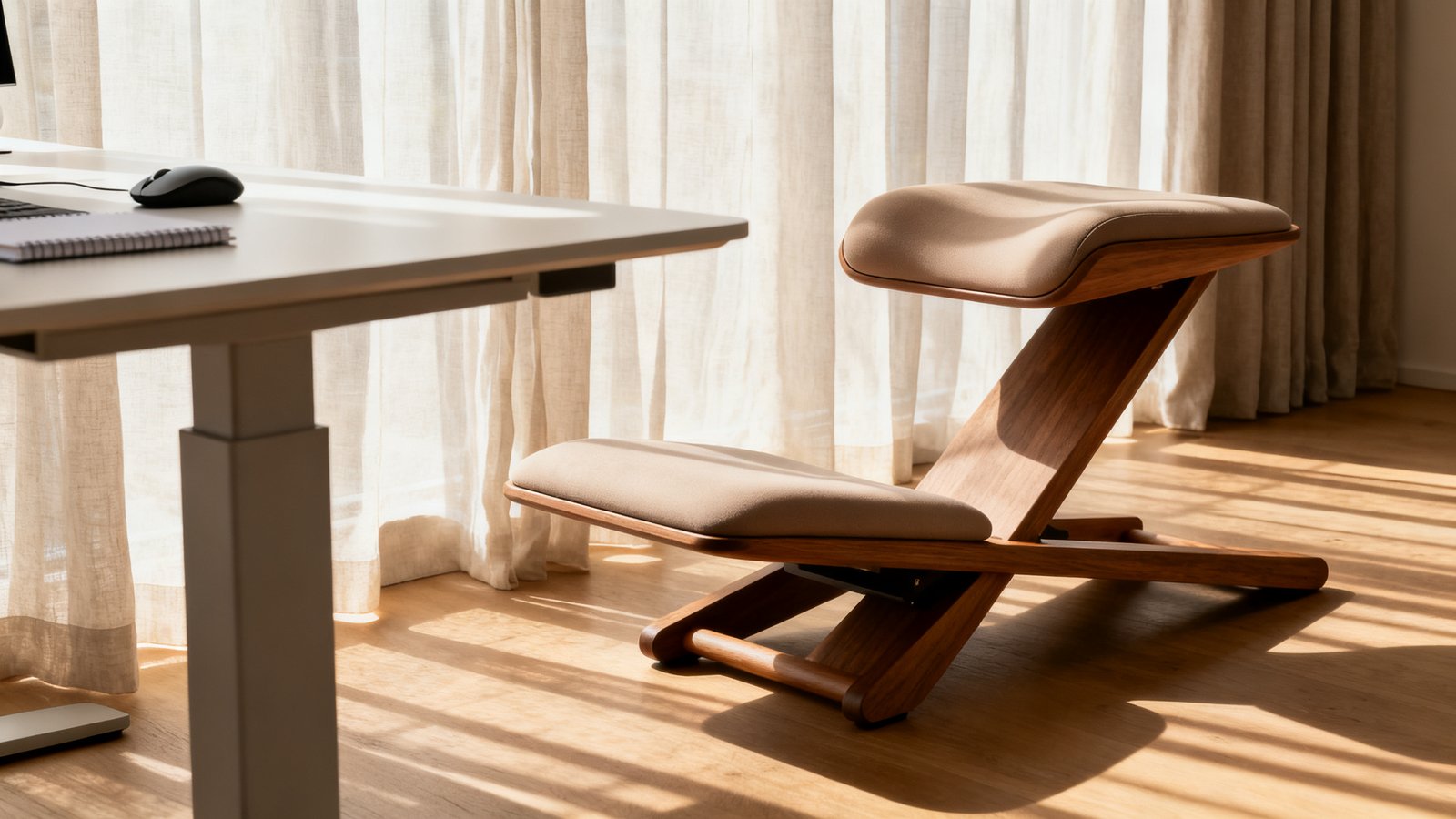
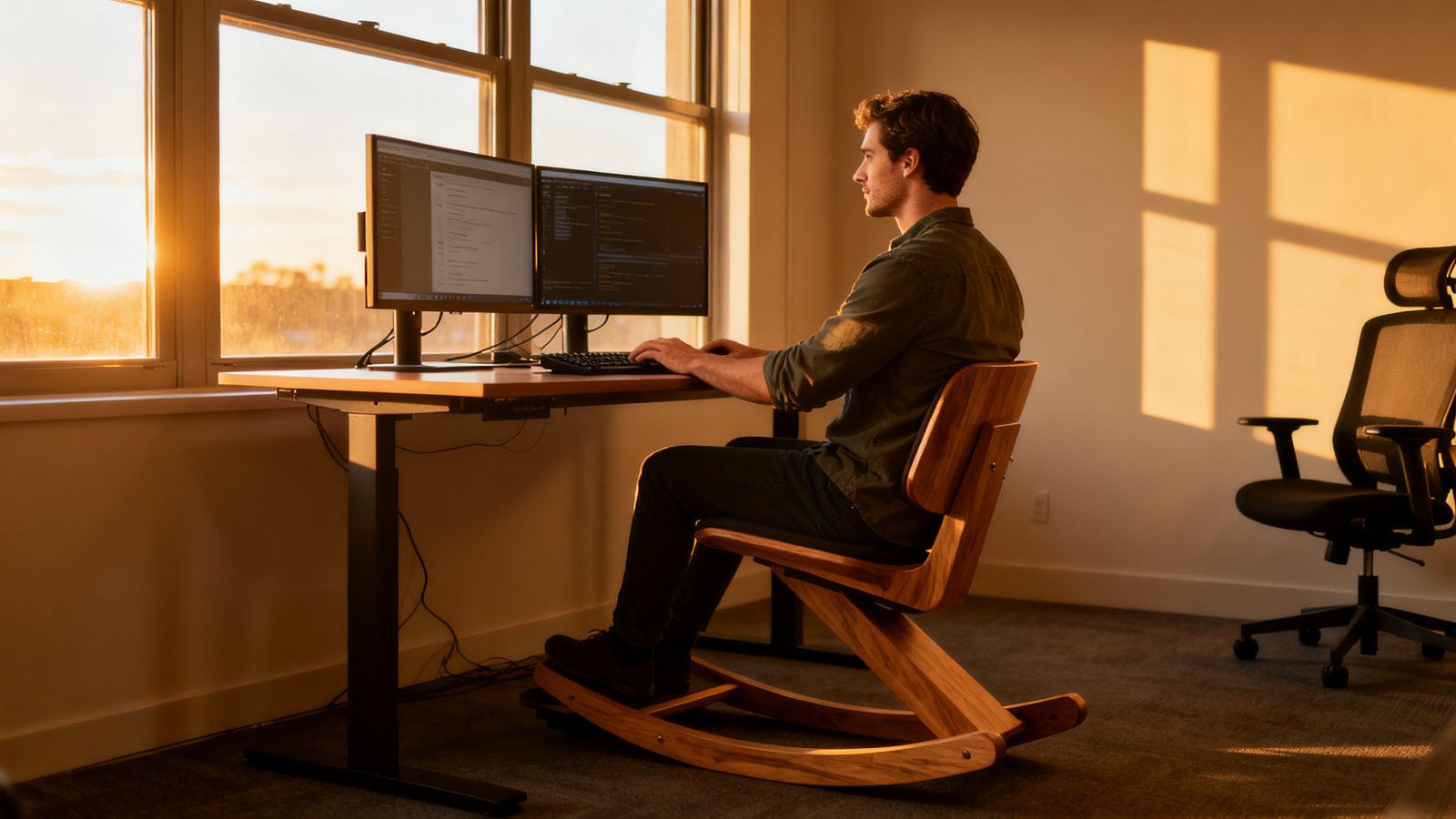
The base type determines everything about long session viability. Sled-based models from Varier, specifically the Variable Balans and the Thatsit Balans, are the only designs that testers report using comfortably for extended sessions. BTOD’s hands-on testing found that sled-based models can be used comfortably for extended sessions once you adapt, often 2+ hours for users who have adjusted over 2 to 3 weeks.
Rigid X-base and 5-star base chairs lock you into one position. There is no flex, no rock, no micro-movement. That sounds fine in theory until you realize your body wants to shift constantly during a workday. A conventional office chair buying guide will tell you that dynamic movement matters for long term comfort. Kneeling chairs with rigid frames remove that entirely.
For most people, the realistic play is to use a kneeling chair as a secondary seat in rotation with a traditional ergonomic chair or a standing desk to alternate with. If you want one seat to rule them all, the Varier Thatsit Balans at $1,499 is the closest thing to a candidate, and even that has limits.
How kneeling chairs affect posture and low‑back mechanics
The mechanism is straightforward. A standard office chair forces your hips into roughly 90 degrees of flexion, which encourages posterior pelvic tilt and flattens the natural lumbar curve. A kneeling chair opens the hip angle by dropping the thighs into a more inclined position, which helps restore some of that lumbar lordosis.
There is actual data behind this, though it is limited. One study published on PubMed found that an ergonomically designed kneeling chair set at +20 degrees inclination maintains standing lumbar curvature to a greater extent than a standard computer chair, with an overall mean difference of 7.633 degrees. That is a measurable shift, not marketing fluff.
What the study does not tell you is whether that 7.633 degree difference translates to less back pain over an 8 hour workday. It tells you the spine sits in a position closer to standing. Whether your particular back finds that position comfortable for hours is a separate question entirely.
The realistic back pain expectation is this: if your pain stems from slouched, flattened lumbar posture, a kneeling chair may help by passively encouraging better alignment. If your pain comes from disc issues, sciatica, or muscular weakness, the chair alone is not a fix. You still need an ergonomic workstation setup that includes movement breaks and possibly physical therapy.
Kneeling chair vs office chair — a practical comparison
This is not a contest where one wins and the other loses. They solve different problems and create different tradeoffs. The table below lays out the differences without the hype.
| Dimension | Kneeling Chair (Sled-Based) | Traditional Office Chair |
|---|---|---|
| Longest comfortable session | 2+ hours (after adaptation) | 4 to 8+ hours (model dependent) |
| Movement during sitting | Rocking on sled base only; rigid on X-base models | Swivel, recline, tilt, roll |
| Lumbar curve maintenance | Better (mean +7.6° closer to standing) | Variable, depends on adjustment and lumbar support quality |
| Knee and shin pressure | Significant; padding quality varies widely | None |
| Height and weight limits | Hard limits: 6’0″, 200 to 250 lbs | Wide range; many chairs support 300 to 400+ lbs and tall cylinders available |
| Price range for quality | $400 to $1,500 | $300 to $1,500+ |
The takeaway from BTOD’s testing is clear. X-base and 5-star base chairs are very rigid and lock users into the same position for the entire session. Sled-based Varier models offer better extended use, but even those cap out around the 2 hour mark for most adapted users. If your workday runs 6 to 10 hours, you will need a second seating option or a standing desk to alternate with.
For someone hunting an affordable ergonomic chair under 300, a kneeling chair probably should not be your only purchase. At that budget, a solid traditional chair will serve you better for all day use.
Top 3 recurring user complaints (what you’ll likely run into)
Based on hands-on testing rather than cherry-picked Amazon reviews, here are the three complaints that surface repeatedly across multiple kneeling chair models.
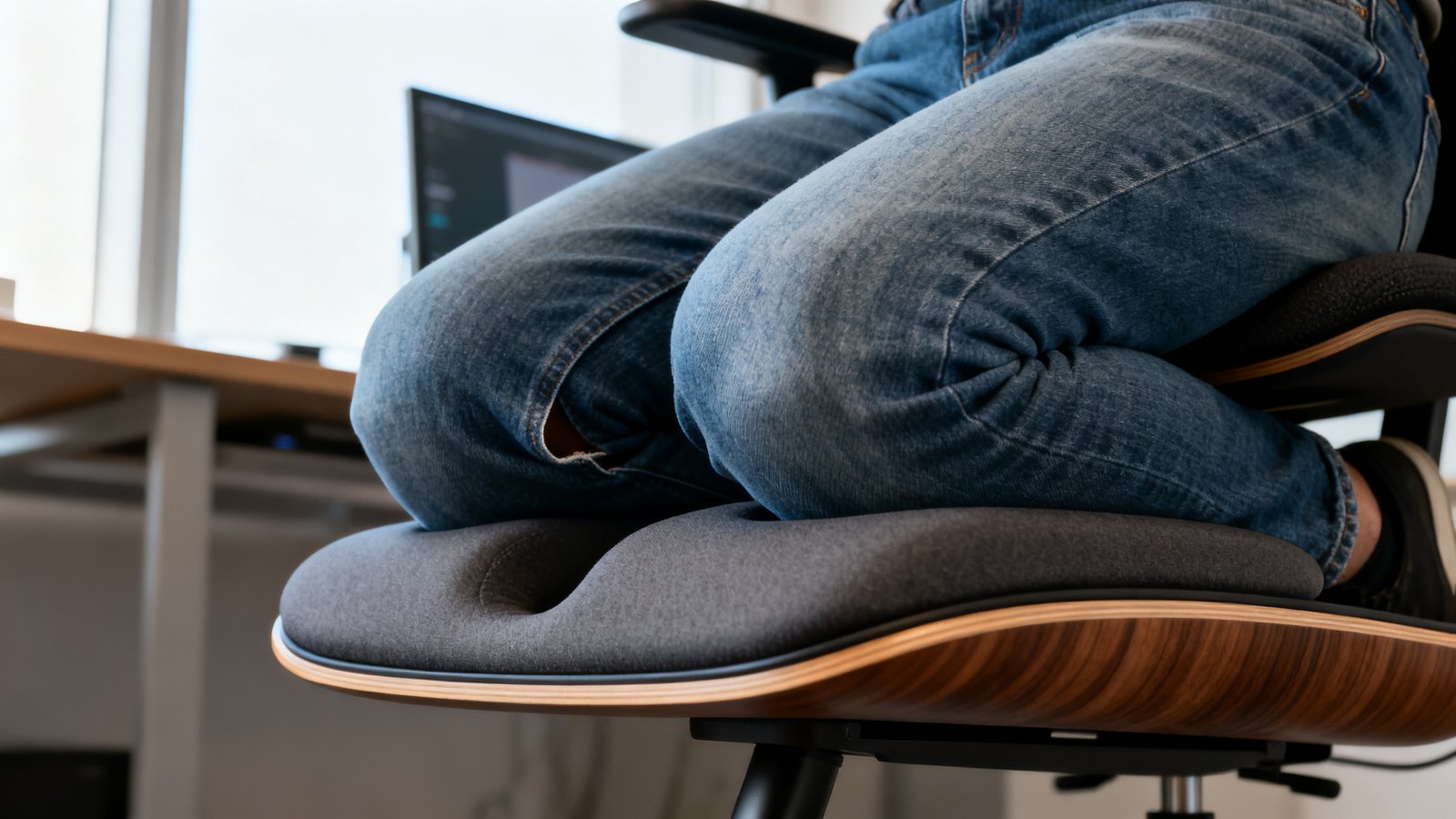
First, poor knee and shin comfort. This is the dominant complaint and it is not limited to cheap chairs. Padding compresses quickly, runs warm against the skin, or sits at an awkward angle that causes shins to hover or slide. The Office Star KCM1425, for example, has an awkward shin pad angle that creates a gap. The Dragonn DNC312 has padding that compresses quickly and runs warm. If you have bony shins or sensitive knees, expect discomfort.
Second, very limited range of motion with no active body movement. Rigid X-base and 5-star base models do not flex at all. You are locked into the same position for the entire session. There is no rocking, no reclining, no shifting weight from side to side. For anyone accustomed to fidgeting in a traditional chair, this feels confining fast. Even if your posture is technically better, the static nature of the position becomes its own discomfort after 30 to 60 minutes.
Third, multiple models are explicitly not comfortable for long hours. The Boss B248 is noted as not good for extended periods. The Office Star KCM1425 is not comfortable for long hours. The 1420 variant has minimal padding that lasts only 20 to 30 minutes. These are not outliers. They represent the majority of the sub-$300 kneeling chair market.
Who should NOT use a kneeling chair (hard limits)
Kneeling chairs are not a good option for big or tall users. All chairs tested by BTOD have weight limits of 200 or 250 pounds. Seat height ranges are generally not adequate for users over 6’0″. Two testers at 6’2″ and 6’3″ did not feel comfortable in any of the kneelers tested. If you are tall and considering a kneeling chair for posture improvement, the geometry simply does not work for your frame.
The exclusion list is clear. Avoid kneeling chairs if you have existing knee pain, patellar tendinitis, or any condition that makes pressure on the shins and kneecaps uncomfortable. Avoid them if you weigh more than 250 pounds, since most models cap at 200 to 250 and exceeding those limits risks frame failure. Avoid them if you are over 6’0″, because the seat height range will not accommodate your leg length properly.
Also avoid a kneeling chair as your only seat if your work requires constant lateral movement, frequent standing and sitting transitions, or reaching across a large desk. The locked position and lack of casters make those tasks frustrating.
Best kneeling chairs for different needs (shortlist + why)
The market splits into two tiers: sled-based models worth considering for extended use, and rigid frame models that work for short sessions only.
For users who plan to use a kneeling chair for hours daily, the Varier Thatsit Balans at $1,499 is the top recommendation from testers. It has a backrest, adjustable seat depth, and the sled base that allows micro-movement. The price is steep, but it is the only model explicitly described as worth the premium for daily multi-hour use.
For a more accessible entry point that still uses the sled base design, the Varier Variable Balans at $407 delivers the same rocking mechanism without the backrest. Sled-based models can be used comfortably for extended sessions once you adapt, often reaching 2+ hours for users who have adjusted over 2 to 3 weeks. This is the model to buy if you want to test whether kneeling chair ergonomics work for your body without spending $1,500.
Budget rigid frame models exist but come with major caveats. They lock you into one position, the padding degrades quickly, and they are unsuitable for sessions longer than 30 to 60 minutes. If you only need a posture break chair to use for 20 minutes at a time alongside a good office chair for back pain, a sub-$200 model might suffice. Do not expect it to replace your primary chair.
For users who want a wooden kneeling chair with an ergonomic aesthetic that fits a minimalist or Scandinavian home office, the Varier line again dominates. There are few competitors that combine the sled base, wood construction, and research-backed angles in the same package.
How to get comfortable for longer sessions (adaptation and posture routine)
Nobody sits down in a kneeling chair for the first time and finds it comfortable for 2 hours. The adaptation period is real and it takes 2 to 3 weeks of consistent, graduated use.
Start with 15 to 20 minute blocks. Use the kneeling chair for one focused task, like answering emails or reading, then switch back to your regular chair or stand. Add 10 to 15 minutes every few days. Your shins, knees, and hip flexors need time to tolerate the new pressure distribution.
The base type determines your ceiling. Sled-based models let you rock and shift weight, which extends comfortable sitting time significantly. X-base and 5-star base models are rigid and become uncomfortable after 30 to 60 minutes regardless of how adapted you are. If you already own a rigid model, the adaptation ceiling is lower and no amount of conditioning will change that.
Check your knee pad angle. If your shins hover above the pad or the pad digs into the top of your tibia, the angle is wrong for your leg length. Some chairs let you adjust pad height. Many do not. If the pad sits too high or too low relative to the seat pan, pressure concentrates in a small area and discomfort arrives quickly.
Alternate seating types throughout the day. A kneeling chair pairs well with a clutter free desk setup that includes both a traditional chair and a standing option. The goal is not to sit in one position for 8 hours. It is to rotate through multiple positions so no single posture overstays its welcome.
Knee pad comfort degrades over time as foam compresses. What feels acceptable in week one may feel worse by month six. If you buy a budget model with thin padding, budget for a replacement pad or a supplementary cushion.
Common unknowns and hard data gaps (what buyers should know but sellers rarely mention)
There are significant gaps in the published evidence on kneeling chairs. The provided sources do not contain any data on the average return rates of kneeling chairs or office chairs. You cannot look up a verified return rate to gauge buyer satisfaction. Anecdotally, kneeling chairs seem to have a higher “tried it and hated it” rate than traditional chairs, but no hard number exists to confirm or refute that.
The provided sources do not contain any measurements of lumbar pressure in mmHg. The study that gets cited to support kneeling chair benefits measured lumbar curvature in degrees, not intradiscal pressure or muscle load. The 7.633 degree difference in lumbar curvature tells you something about spine position. It tells you nothing about whether the position reduces actual pressure on vertebral discs or relaxes paraspinal muscles. Sellers often imply pressure reduction without having the data to back it up.
No long term outcome studies exist in the provided sources. You will not find a randomized controlled trial following 200 office workers for two years comparing kneeling chairs to traditional chairs on back pain incidence, sick days, or healthcare utilization. The evidence base is mechanistic and short term.
What this means for you as a buyer is simple. Treat claims of back pain relief as plausible but unproven. Buy from companies that offer a trial period and a clear return policy. If a seller will not let you test the chair for 30 days, assume the product does not survive real world use well.
Buying checklist — what to test and specs to confirm before purchase
Use this checklist before clicking buy on any kneeling chair.
First, determine the base type. Sled bases allow rocking and weight shifting. X-base and 5-star bases lock you into one position. If you intend to use the chair for more than 30 minutes at a time, a sled base is functionally required.
Second, inspect the knee and shin pad design. Look for thick, dense foam that resists compression. Check whether the pad angle is adjustable. Read reviews specifically mentioning shin comfort after several weeks of use. If padding compresses quickly or has an awkward angle out of the box, it will only get worse.
Third, confirm the weight limit and seat height range. Most chairs cap at 200 or 250 pounds. Seat height ranges are generally not adequate for users over 6’0″. If you are close to either limit, contact the manufacturer before purchasing.
Fourth, verify the trial and return policy. Given the lack of return rate data and the high variability in individual comfort, a 30 day trial with a straightforward return process is worth more than any spec sheet.
Fifth, match the price to your expected usage. If you plan to use the chair for 20 minute posture breaks, a $200 rigid model is reasonable. If you want a chair that can handle 2+ hour sessions, expect to pay $400 to $1,500 for a sled-based model. The budget home office setup under 1000 should probably allocate more to a solid traditional chair and treat a kneeling chair as a supplementary purchase.
Under-covered topics to explore deeper
Three topics deserve more attention than most buying guides give them.
First, kneeling chair suitability for tall and heavy users is almost entirely ignored by manufacturers. Weight limits of 200 or 250 pounds and seat height ranges inadequate for users over 6’0″ mean a large portion of the population is excluded from the category entirely. If competitors wanted to differentiate, they would develop a kneeling chair with a 300+ pound weight capacity and extended seat height range. No such product currently exists in the tested group.
Second, long term knee comfort gets overshadowed by the back pain narrative. Everyone asks whether kneeling chairs help backs. Few ask what happens to knees after six months of daily use. Knee and shin pad compression, patellar pressure, and the effect of prolonged kneeling posture on knee joint health are under-studied and under-discussed. If you use a kneeling chair regularly, monitor your knees as closely as you monitor your back.
Third, transition plans and progressive adaptation protocols are rarely spelled out. The “2+ hours after 2 to 3 weeks” finding from sled-based testing implies a structured ramp-up period. A formal protocol might look like: week one at 15 minutes twice daily, week two at 30 minutes twice daily, week three at 45 to 60 minutes, and only then attempting a continuous 2 hour block. Scheduled alternation between a kneeling chair, a traditional chair, and standing prevents any single posture from accumulating too much fatigue.
Final recommendations and call to action
The best kneeling chair for most people interested in testing the category is the Varier Variable Balans at $407. It uses the sled base that enables 2+ hour sessions after adaptation, it costs a fraction of the Thatsit Balans, and it gives you a legitimate trial of the kneeling chair experience without the compromises of a rigid budget model.
If you are over 6’0″, over 250 pounds, or have any history of knee pain, skip the category entirely. The geometry and weight limits do not accommodate your body, and no amount of brand loyalty changes that.
If you decide to buy, purchase from a retailer with a clear 30 day return policy. The absence of published return rate data means you cannot rely on aggregate buyer satisfaction statistics. Your own body’s response is the only data that matters. Give the chair 3 weeks of graduated use before making a final decision, and keep your traditional office chair nearby. The goal is not to replace your chair. It is to add another position to your daily rotation and see if your back feels better for it.
Frequently Asked Questions
Can a kneeling chair fully replace my office chair?
For most people, no. Even the best sled-based models cap comfortable continuous sitting at around 2 hours after adaptation. If you work 6 to 10 hour days, you will need a second seating option or a standing desk to alternate with. A kneeling chair works better as a secondary posture tool than a primary chair.
Are kneeling chairs actually good for back pain?
They can help if your back pain stems from poor sitting posture and a flattened lumbar curve. Research shows a kneeling chair at +20 degrees inclination maintains lumbar curvature closer to standing, with a mean difference of 7.633 degrees compared to a standard chair. However, no long term outcome studies prove kneeling chairs reduce back pain incidence, and they will not fix pain caused by disc issues or muscular weakness.
How long does it take to adapt to a kneeling chair?
Expect a 2 to 3 week adaptation period. Start with 15 to 20 minute sessions and add 10 to 15 minutes every few days. Sled-based models allow reaching 2+ hour sessions after adaptation. Rigid X-base and 5-star base models have a lower comfort ceiling around 30 to 60 minutes regardless of adaptation.
What is the weight limit on most kneeling chairs?
Most kneeling chairs have weight limits of 200 to 250 pounds. Heavier users should verify the limit with the manufacturer before purchasing, as exceeding it risks frame failure and voids warranties. No tested models currently support weights above 250 pounds.
Can tall people over 6 feet use kneeling chairs?
Generally, no. Seat height ranges on most kneeling chairs are not adequate for users over 6’0″. Testers at 6’2″ and 6’3″ reported discomfort across all models tested. If you are tall, the geometry of the category simply does not fit your proportions well.